

Building Electrification: What Developers Need to Know About Moving Beyond Gas
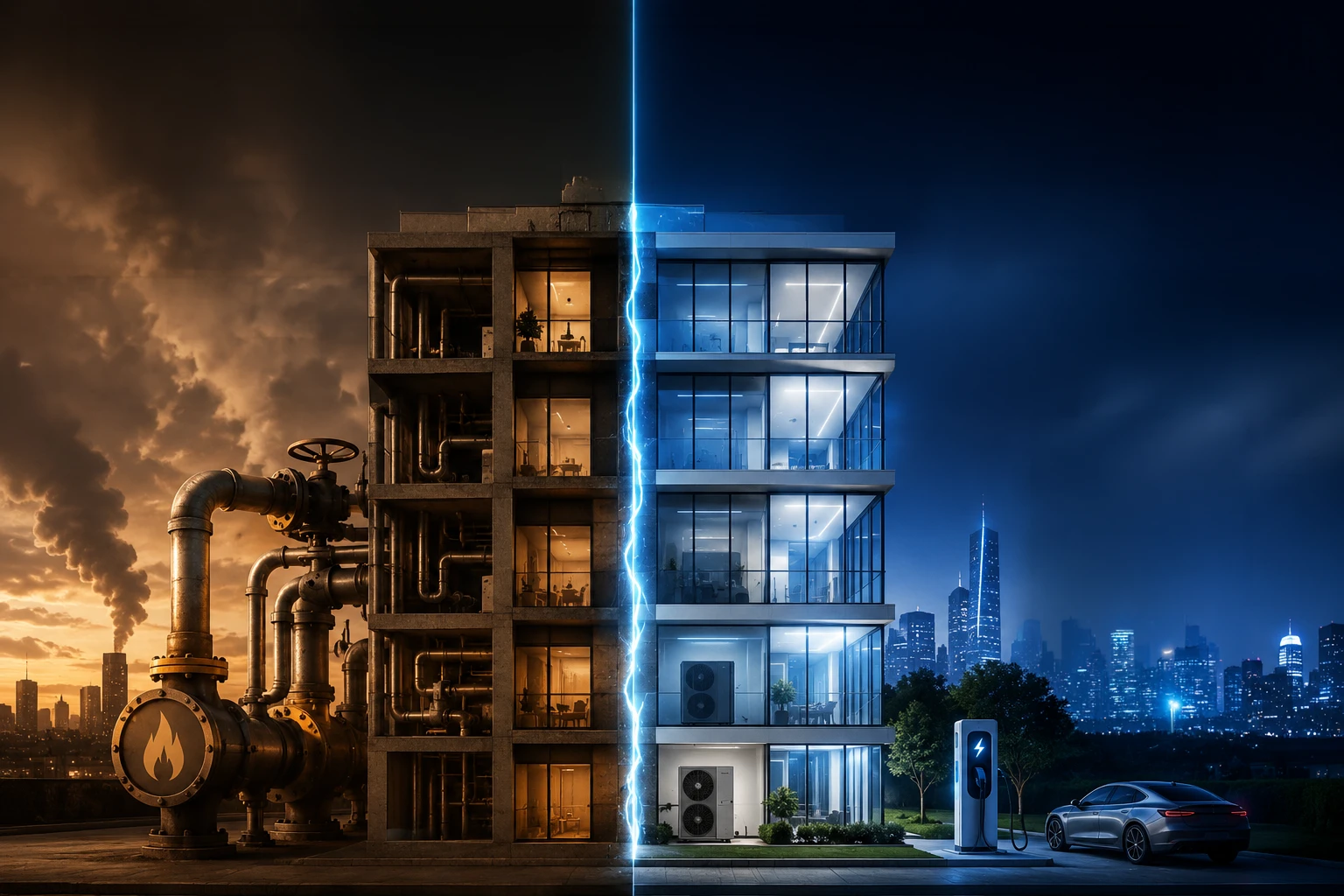
The dependence on gas in buildings is beginning to raise questions that go beyond the normal operation of their systems. Energy volatility, geopolitical tensions, new regulations, decarbonization targets, and the growth of renewable energy are reshaping the market. Continuing to rely on fossil fuel–based systems may increase risk, reduce adaptability, and weaken long-term competitiveness.
This topic matters because it affects key real estate decisions. It influences initial investment, operational costs, long-term performance, and asset value. For developers, investors, owners, and design teams, building electrification is becoming an attractive alternative. It supports environmental, economic, and social goals while strengthening long-term asset performance.
Environmental Aspect

One of the main drivers of building electrification is the reduction of CO₂ emissions during operation, considering that buildings account for approximately 26% of global energy-related emissions.
Electrification is one of the most effective ways to reduce operational emissions, as it eliminates the direct use of fossil fuels. This allows buildings to significantly lower their carbon footprint, especially when combined with renewable energy sources.
Additionally, technologies used in electrification tend to be more efficient, such as heat pumps, which are 2 to 4 times more efficient than conventional heating systems.
This means that emission reduction is not the only benefit—efficiency gains make electrification even more compelling. Several case studies show emission reductions of up to 50% in single-family homes and up to 70% in multifamily buildings after electrification retrofits.
Building Electrification
Economic Aspect

Electrification changes more than the energy source. It also reduces a building’s exposure to energy price volatility, supply disruptions, and availability risks.
Geopolitical tensions, regulatory changes, and stricter decarbonization targets are reshaping energy markets. Heavy dependence on fossil fuels increases operational and financial uncertainty.
At the same time, global investment trends clearly show the direction of the energy system: according to the IEA, global energy investment is expected to reach USD 3.3 trillion in 2025, with approximately USD 2.2 trillion allocated to renewables, grids, storage, efficiency, and electrification—about twice the investment in oil, gas, and coal.
Under this logic, Investors can also view electrification as a long-term economic decision reducing exposure to energy infrastructures that are losing relevance in the global transition. Before discussing the investment required to accelerate this shift, it is important to recognize that many countries still rely heavily on fossil fuels.
For example, in 2023, fossil fuels accounted for 45.5% of France’s total energy supply, while solar and wind represented only 3%. That same year, Germany relied on fossil fuels for 77.9% of its energy demand, with only 7% generated from solar and wind.
Experts estimate that investments must quadruple between 2024 and 2030 to meet global climate commitments, reaching approximately USD 4.5 trillion (or 5% of global GDP).
Specifically, countries in the Global South will need to triple annual investments in clean energy, from USD 770 billion to between USD 2.2 and 2.8 trillion by the early 2030s.

Social Impact of Building Electrification
Beyond environmental and economic benefits, electrification has a direct impact on quality of life and how spaces are experienced. One of the most relevant effects is the improvement of indoor air quality. Combustion-based systems generate pollutants such as carbon monoxide, nitrogen oxides, and particulate matter, which negatively affect occupant health.
Electrification eliminates these sources within buildings, reducing respiratory risks and improving indoor environments, especially in dense urban settings.
Furthermore, modern technologies provide greater control over indoor conditions. Systems such as heat pumps allow more precise regulation of temperature and ventilation, resulting in higher levels of comfort, well-being, and productivity.
From a broader perspective, electrification also has implications for equity and access to safer energy services
Electric systems reduce the risks associated with fuel storage and use. They also integrate more easily with decentralized solutions such as distributed generation. In regions with limited access to traditional energy infrastructure, this opens opportunities for more resilient and adaptable models.
However, this process also presents social challenges that must be managed strategically. Electrification requires investment, technological adaptation, and changes in how users interact with buildings.
Without an inclusive approach, there is a risk of widening the gap between high-performance projects and those with fewer resources.
Therefore, the social dimension of electrification must consider not only its benefits but also the ability to ensure a just transition.
In this context, electrification is no longer just a technical decision—it becomes a tool that directly influences health, well-being, and user experience, consolidating its role as a key element within a comprehensive sustainability strategy in the construction sector.
Building Electrification: Final Takeaways
Is clear that developers should no longer view building electrification solely as an environmental or technical decision, but also as a strategic one.
It involves critical aspects such as energy risk, asset competitiveness, and the ability to adapt to evolving market conditions that increasingly demand environmental responsibility and energy efficiency.
As the real estate sector faces challenges related to decarbonization, efficiency, and resilience, continuing to rely on fossil fuel–based systems becomes both limiting and unviable.
Moving toward electrified buildings not only reduces emissions but also aligns assets with a rapidly transforming energy matrix that increasingly incorporates renewable sources.
Today, for developers, investors, and asset owners, the question is no longer whether electrification is viable, but how prepared each project is to respond to the energy and market conditions ahead.
Electrification emerges as a fundamental strategy to achieve global energy transition goals and ensure a resilient and prosperous future. It represents a significant shift in how industry, transportation, housing, and public services are conceived across infrastructure, regulations, investments, and innovation.
However, facing this reality means recognizing that electrification is not merely a technological change. As discussed throughout this text, it requires a comprehensive approach across environmental, social, and economic dimensions. Reducing emissions, improving energy efficiency, and eliminating fossil fuels are not isolated goals—they are interconnected levers that reshape how architects design spaces, investors finance them, and people inhabit them.
Continuing to invest in fossil fuel–dependent buildings increasingly means investing in assets with higher risk exposure, lower adaptability, and a lifespan tied to declining energy infrastructure.
Explore more Insights



Want to stay updated?
If you enjoyed this content and want to stay updated on ideas, projects, events, and insights shaping the future of high-performing buildings, subscribe to our Insights Blog