

Green Infrastructure in Colombia: 38% Biodiversity Gain
What happens when a development team chooses not to clear a site’s existing ecosystem before building? Most assume it slows construction down or adds cost, treating green infrastructure in Colombia as a nice-to-have rather than a core part of the plan. As climate risk reshapes real estate and regulators push for measurable environmental performance, developers across Colombia are beginning to find out that’s not always true.
A recent project in Jamundí, in Colombia’s Valle del Cauca, is proof. The site had genuine ecological value from the start. Instead of clearing it, the development team designed around it, working with the land instead of against it. The result: a 38% increase in the site’s biodiversity index in under two months. That’s one of the fastest measurable ecological gains recorded on a construction site in Colombia.
This same idea, that resilient cities anticipate and regenerate rather than just resist, came up repeatedly at this year’s Construverde, where landscape architects and water management specialists explained what nature-based design looks like once it moves past the concept stage. The Jamundí case is an early example of that thinking already producing results in Colombia. Here’s what that looks like in practice, and why it matters for anyone developing in the country today.
What Are Nature-Based Solutions? Notes from Construverde
Nature-based solutions (NBS) are strategies that use natural processes, rather than only “gray” engineering, to manage climate and environmental risk. Instead of solving a water, heat, or biodiversity problem by building around it, NBS solve it by working with the ecosystem that’s already there.
At Construverde, landscape architects and water management specialists framed this shift clearly: resilient cities are no longer just cities that resist climate shocks. They’re cities that can anticipate, adapt, and regenerate. That means designing at every scale at once, treating the building, the site, and the city as a single system. It also means treating the land itself as living infrastructure, not a set of separate, unrelated systems.
In cities, this often takes the form of SUDS (Sustainable Urban Drainage Systems): green roofs, rain gardens, permeable pavement, and constructed wetlands that absorb, filter, and slow water down instead of channeling it away. These systems do several jobs at once, something conventional gray infrastructure was never designed to do:
The Sponge City Model
The broader vision behind this approach is what experts call the “sponge city” model: an urban environment designed to absorb rainfall and manage it intelligently, rather than draining every drop away as fast as possible.
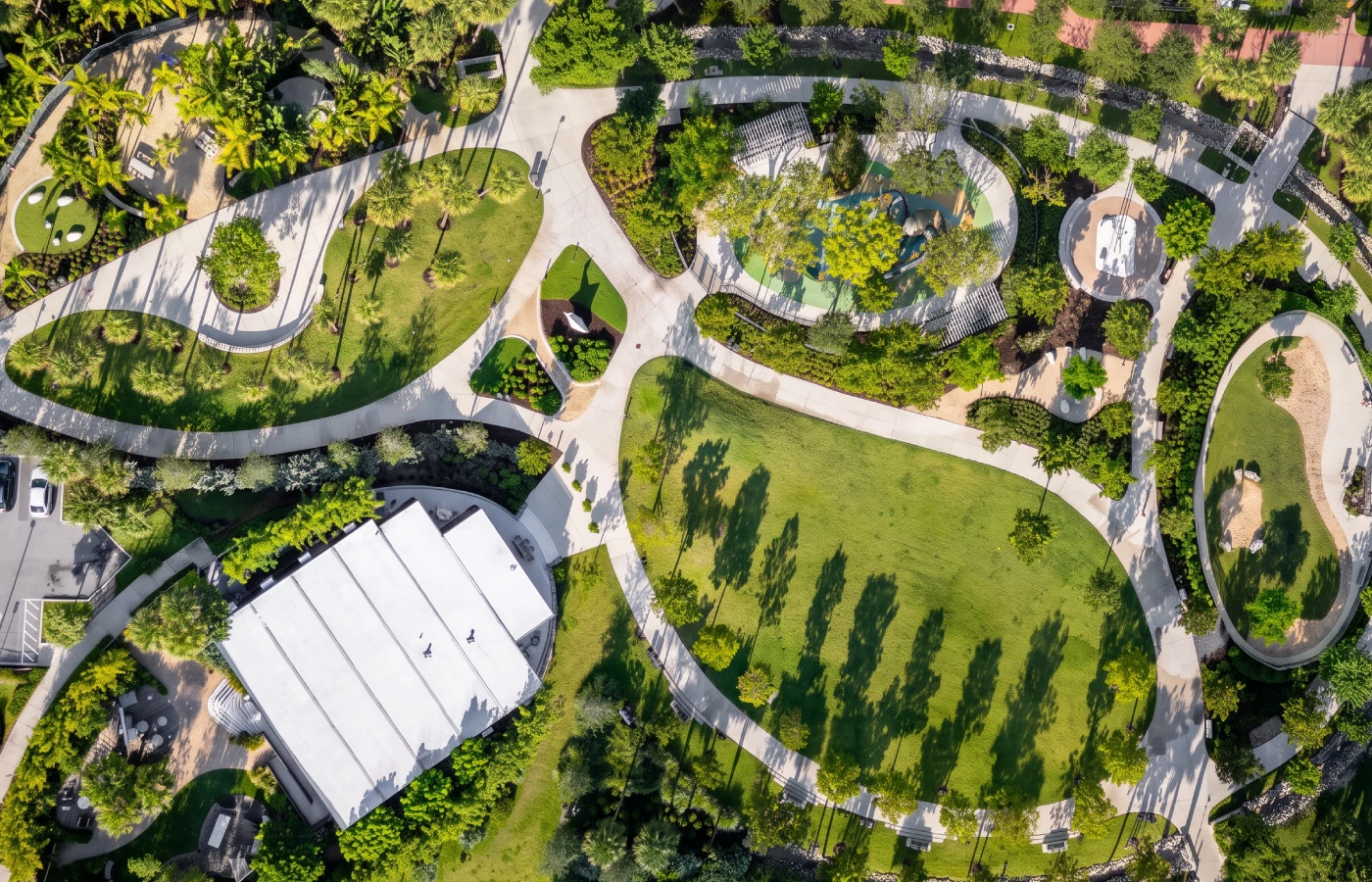
One of the clearest examples shared at Construverde came from Canopy Park in Miami, where water management was a starting point, not an afterthought. The site used to flood regularly because of high groundwater levels and heavy rainfall. The design team’s response combined a 25,000-gallon cistern with SUDS-style drainage and reshaped topography, so rainwater flows across the park and collects at its lowest point. That water then irrigates the green space year-round, with underground injection wells and a controlled drain to the bay as backup during storms. The same project planted over 400 trees, capturing an estimated 23 tons of carbon in its first year. That figure is projected to reach 56 tons within a decade. It’s a working example of a park that’s pleasant to walk through and doing serious hydrological work underneath.
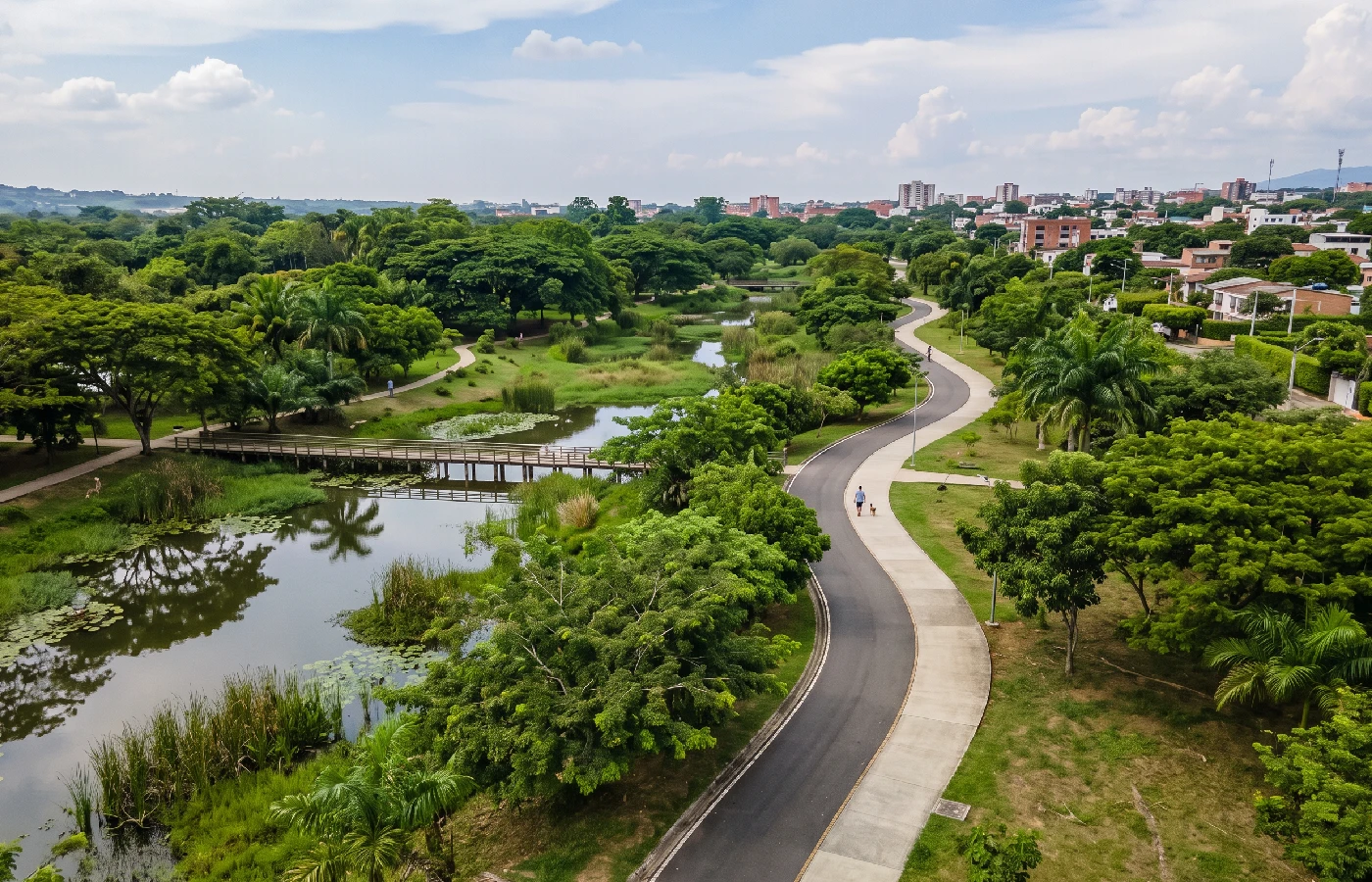
In Colombia, this isn’t just theory either. In Bogotá, a single park, Parque Bicentenario, captures approximately 9,000 m³ of water per year and filters roughly 8,000 kg of PM10 pollution annually. Scaled citywide, Bogotá’s green infrastructure (roughly 100,000 m² of it) manages up to 20,000 m³ of water per year and produces enough oxygen for 100,000 people. Numbers like these are what move green infrastructure in Colombia from “environmental nice-to-have” to a line item city planners and engineers can actually budget for.
The Jamundí Case: Green Infrastructure in Colombia in Action
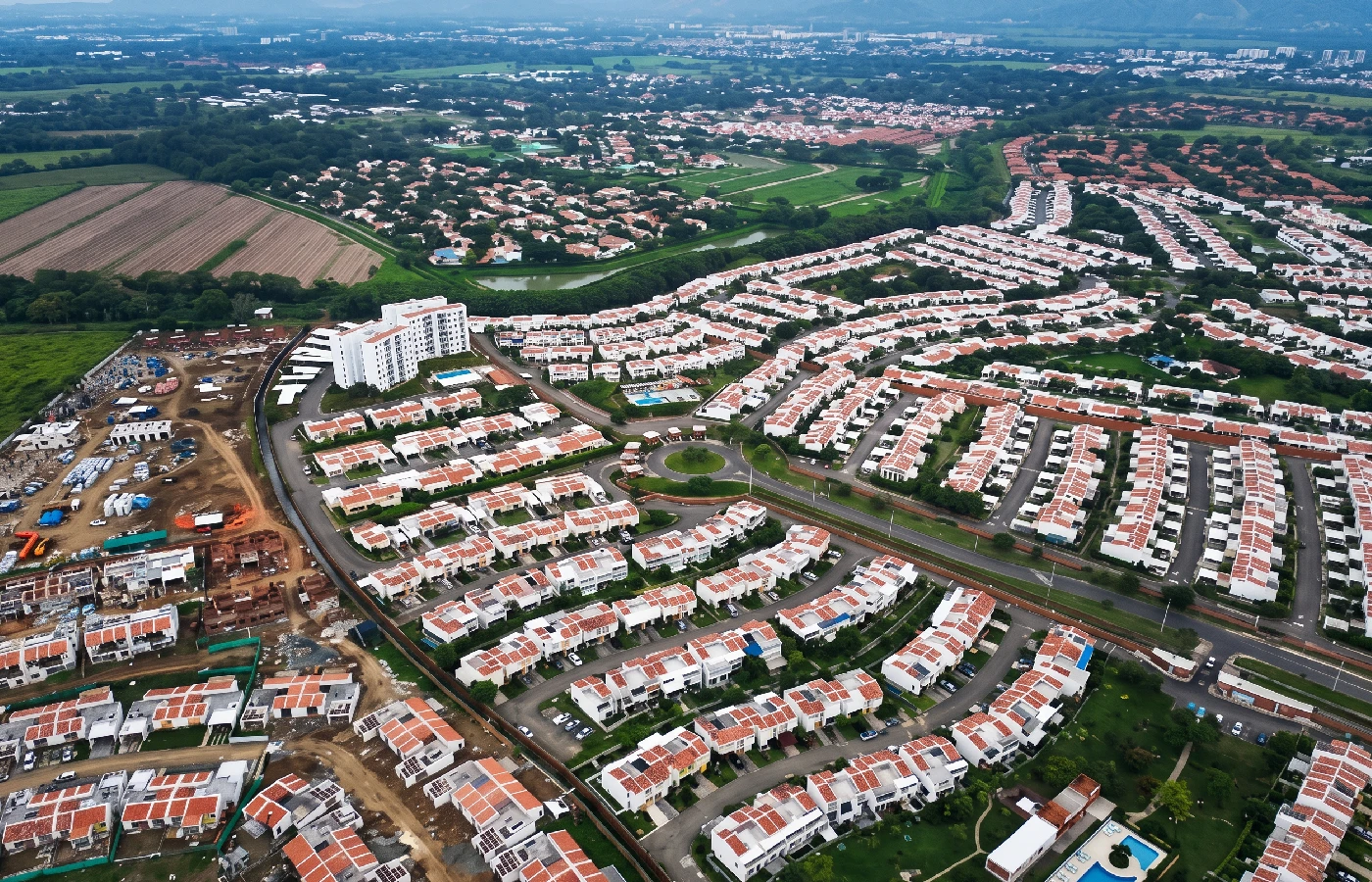
The Jamundí project sits on a site with genuinely high pre-existing biodiversity. It’s not a blank lot to be cleared and rebuilt, but an ecosystem the development had to work alongside.
The team’s approach:
- Manual wetland recovery across 5 hectares, rather than mechanized clearing and rebuilding
- Integration of a 22-hectare urban park as part of the overall site design, not as a leftover green space carved out after the fact
The result, tracked and measured:
That’s a striking timeline for ecological recovery, and a strong signal that ecosystem-respecting methods can outperform conventional land-clearing approaches, even on a tight schedule.
Sustainable design isn’t inherently more expensive. What’s expensive is failing to understand the full project, including the ecological conditions already present on a site.

Sustainability Is Also a Business Decision
The point here isn’t “protect nature because it’s the right thing to do,” though it is. It’s that green infrastructure produces measurable, defensible results within timeframes that matter to a project’s schedule and budget.
A result like 38% in two months isn’t a soft ESG talking point. It’s a number a project team can put in front of investors, certifiers, and future residents.
Sustainable design isn’t inherently more expensive. Green infrastructure in Colombia is proving that point in real time. What’s expensive is failing to understand the full project, including the ecological conditions already present on a site. Ignoring or fighting those conditions costs more than designing with them from the start.
Projects that integrate nature-based thinking early, rather than retrofitting it later, consistently show:
Lower long-term operating costs
This same logic played out in another Colombian project we’ve covered: how sustainable architecture firms delivered LEED Platinum for Colombia’s largest shopping center. There too, early, integrated design decisions produced results that an “add sustainability later” approach couldn’t have matched.
Where Green Loop Fits Into This
Ecological restoration isn’t a side conversation in sustainable building anymore. It’s becoming a formal part of how projects are certified. LEED v5’s third pillar, Ecological Conservation and Restoration, explicitly encourages projects to restore ecosystems, support biodiversity, and integrate nature-based solutions whenever possible. These are the same principles behind the Jamundí case and Bogotá’s sponge city model. It’s the same shift now shaping green infrastructure in Colombia at every scale.
For more than 17 years, Green Loop has worked with developers, architects, contractors, investors, and building owners across Latin America. We turn sustainability strategy into measurable, certifiable results through LEED, EDGE, and WELL certifications, decarbonization roadmaps, and resilience planning for both new developments and existing assets.
If you’re evaluating a site and want to know what it would take to certify, finance, or design with its existing ecological value in mind, talk to our team.
Looking Ahead
The Jamundí case isn’t an isolated success story for green infrastructure in Colombia.. It’s a signal of where development in Colombia is headed.
As climate volatility increases and cities across the region face both flooding and drought within the same year, the sites that perform best won’t be the ones that fight their surrounding ecosystem. They’ll be the ones designed to work with it from day one.
That’s the direction the industry is moving. And at Green Loop, we believe the projects that measure and design for this now will be the ones setting the benchmark for everyone else.

Want to stay updated?
If you enjoyed this content and want to stay updated on ideas, projects, events, and insights shaping the future of high-performing buildings, subscribe to our Insights Blog