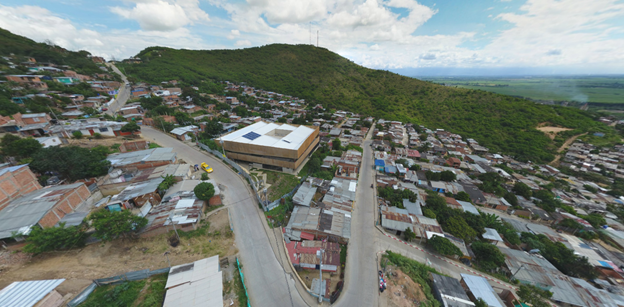
This spectacular building, where concrete is the protagonist, received recognition as the most sustainable public school in the region.
IE Gabriel Garcia Márquez, an example of sustainability in public schools.
The Gabriel Garcia Márquez Educational Institution, located in the municipality of Yumbo, Valle del Cauca, is the perfect example of sustainable construction. It achieves the right balance between environmental responsibility, social responsibility and smart investments, and should be the benchmark par excellence for future public schools to be designed and built in the country.
The main and greatest achievement of this public school and the design team led by architects Jota Paul Restrepo and Camilo Restrepo Ochoa of the firm Agenda Arquitectura, was to demonstrate that building high quality public schools is totally feasible without significant budgetary impacts and achieving comfortable spaces that ensure a better education for the most vulnerable children.
From the conception of the building, it was designed to be energy efficient, thermally comfortable, but also low maintenance, which is why it was perfectly aligned with the LEED (Leadership in Energy and Environmental Design) certification system, the world’s most recognized certification for sustainable construction.
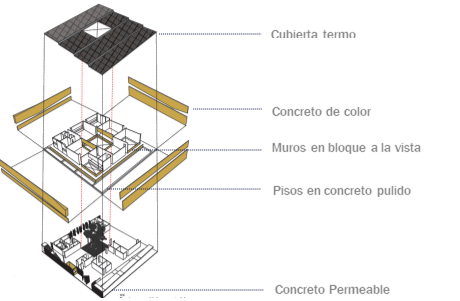
This 1,720 m² project, in which concrete was the protagonist from the structure, with high-strength concrete in the slabs and shotcrete in the construction of a retaining wall, but especially in the facade that was poured with a ginger-colored concrete, which gives it a distinctive touch within the context of the neighborhood and makes it an inescapable landmark. In this project nothing was left to chance and every aspect of the building was thoroughly studied through multiple computer simulations to ensure that the spaces had the right conditions of temperature, natural light, air flow and acoustics for the students to feel comfortable and be able to concentrate on their studies.
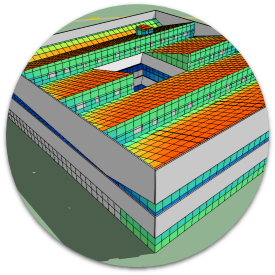
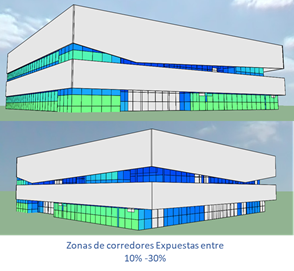
According to several studies by renowned institutions such as the Center for Green Schools, this type of school has a significant impact on concentration, comfort and even an improvement in students’ test results. This is a very valuable strategy to begin to close the social gap, since education is the best mechanism for social advancement.
For the time being, this project was presented during the annual sustainable construction fair – Greenbuilding Mexico 2019, as a Latin American example for being the first public school to achieve the recognized LEED seal, awarded by the US Green Building Council. And recently the Ministry of National Education, with the support of the Colombian Sustainable Construction Council (CCCS), has used this success story as a reference for the development of the «Guide for the implementation of sustainability strategies in the design and construction of new single-day schools in Colombia». And we hope that soon this type of practices will become the common denominator of all public schools in the national territory, guaranteeing a quality educational infrastructure that allows a good education for the most needy in society. We are convinced that only with quality education we can begin to close the inequality gaps and finally progress as a country.
LEED-certified achievements
This school was the result of an initiative between the public and private sectors, with the leadership of the Argos Foundation, the Ministry of Education, the Mayor’s Office of Yumbo and Findeter, who joined forces and invested more than 5.5 billion pesos, achieving exceptional results that are worth highlighting:
Most importantly, the social impact of this infrastructure will benefit approximately 260 children and youth, as well as the neighborhood community, who will be able to make use of it for community events.
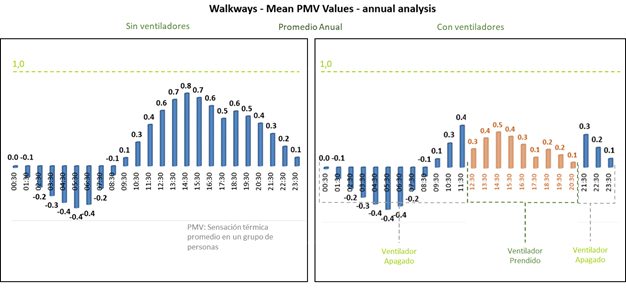
The building was designed to be thermally pleasant, minimizing the need for air conditioning or ceiling fans, ensuring that students are comfortable and can concentrate.
The furniture was donated by the Postobón Foundation, through the MiPupitre Postobón program, and is made from recycled material, recovering 25 tons of Tetra Pak waste, that is, 2.8 million 250 ml juice boxes, which stopped going to landfills.
The school has a bicycle rack made from recycled material and allows students to safely and comfortably store their bicycles while they study.
The building is designed to instill environmental responsibility and care for the planet in children from an early age, which will surely make them more critical and responsible people in the future.
The school had an acoustic study and several strategies aimed at guaranteeing adequate spaces for learning. Although it may seem obvious, not many public schools are designed taking into account a specialty that is fundamental for student learning, because if the student who is in the last row cannot hear the instructor well, he cannot concentrate on what he is being taught and his academic performance will not be ideal.
The budgetary impact to reach LEED certification level was close to 1.8% of the budget of any other public school with the same constructed area. This shows that with smart investments and knowing where to put the resources, public schools can be achieved that would have nothing to envy to a private school.
In addition, the project has LED lighting, use of natural light due to the architectural layout of the spaces, use of natural air currents, rainwater harvesting, efficient sanitary fixtures, among other strategies that make it an energy efficient building and in the use of water resources.
In this way, the school is a building that breaks paradigms and precepts on sustainable construction; a building that leads the change towards public institutions that not only provide a space to study, that save water and energy, but that mainly care about the comfort of their students and teachers.
We hope to see more public schools like this in the near future.