

LEED Certification for Hotels: 2026 US and Caribbean Guide
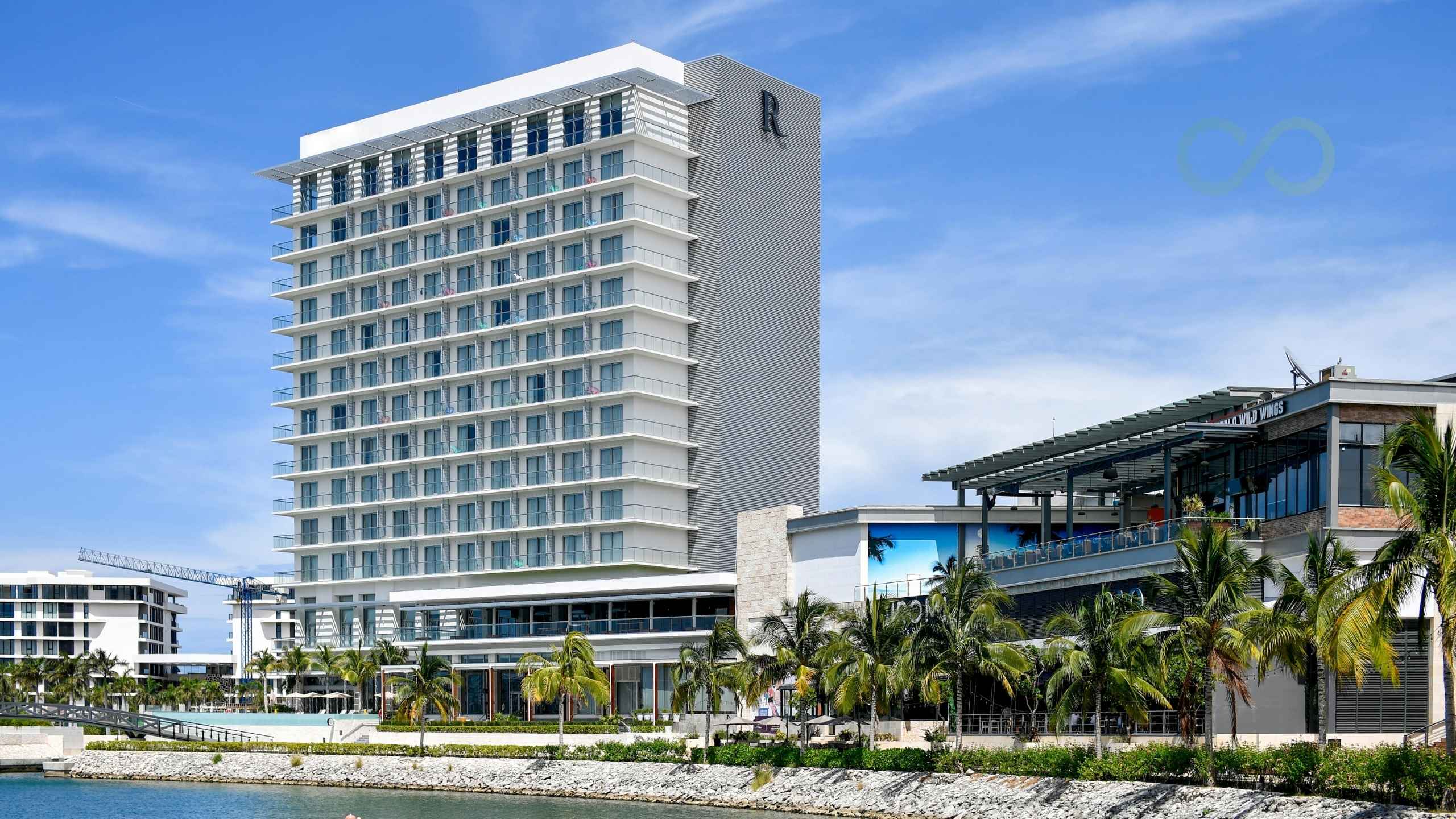
LEED certification for hotels follows one path: pick the right rating system, meet every prerequisite, earn at least 40 of 110 points and pass third-party review by Green Business Certification Inc. (GBCI). For a hotel of 100+ rooms, the decisions that set your final level happen in early design.
This guide goes deeper than our [overview of hotel certifications](Q3 #1 Hotel Certs ENG). USGBC launched LEED v5 in April 2025, but projects registering by June 30, 2027 can still choose v4.1.
What LEED means for a hotel
LEED is the rating system of the U.S. Green Building Council (USGBC). Applied to a hotel, it scores your property on energy, water, materials, site, transportation and indoor quality. In v5, about half of the points target decarbonization.
Developed by the IFC, EDGE grants certification to buildings that are expected to cut energy, water and embodied energy use by at least 20%. LEED covers more ground, and hotel REITs such as Host Hotels & Resorts tie it to green bond programs that feed [ESG reporting](Q4 #21 ESG Reporting).
BD+C vs O+M vs ID+C: which one fits your hotel
BD+C covers new hotels and major renovations where systems and envelopes change. O+M certifies an existing hotel on measured performance. ID+C fits guestroom, lobby and meeting-space renovations inside an existing shell.
US projects show the split. Following a top-to-bottom renovation, 1 Hotel South Beach secured LEED Silver through the BD+C rating system. In 2026, Florida’s Singer Oceanfront Resort achieved Silver certification under ID+C, while Hyatt Regency Maui maintains a Gold rating under O+M. Choosing the rating system that fits your project’s scope is essential; otherwise, some points become unattainable.
How LEED v5 BD+C credit categories apply to hotels
LEED v5 BD+C: New Construction organizes its prerequisites and credits into eight categories.
| Category | Points | Where hotels score |
| Integrative Process (IP) | 1 + 3 required assessments | Climate risk, carbon, human impact |
| Location and Transportation (LT) | 15 | Transit access, EV charging, less parking |
| Sustainable Sites (SS) | 11 | Habitat, stormwater, outdoor amenities |
| Water Efficiency (WE) | 9 | Guestroom fixtures, laundry, cooling towers |
| Energy and Atmosphere (EA) | 33 | 24/7 HVAC, hot water, renewables |
| Materials and Resources (MR) | 18 | Embodied carbon, FF&E, construction waste |
| Indoor Environmental Quality (EQ) | 13 | Indoor air, daylight, low-emitting materials |
| Project Priorities (PR) | 10 | Local priorities, one point for a LEED AP |
Energy and Atmosphere outweighs every other category, and hotels feel it most. Guestrooms run around the clock, and kitchens and laundries load the hot-water system. New v5 credits such as Electrification reward systems your chief engineer already manages. Rooftop arrays feed Renewable Energy, as our [solar hotels guide](Q4 #13 Solar Hotels) explains.
The required climate resilience assessment matters most in the Caribbean and on the Gulf Coast. It overlaps with the storm-hardening work in our [hurricane-ready hotels guide](Q3 #3 Hurricane Hotels).
Understanding LEED Levels and Setting Your Score Goal
LEED recognizes projects at four tiers: Certified (40–49 points), Silver (50–59), Gold (60–79) and Platinum (80 or more). Platinum starts 20 points above the Gold threshold (60 vs. 80).
Beyond the point threshold, Platinum is contingent on securing the Electrification, Enhanced Energy Efficiency, Renewable Energy and Reduce Embodied Carbon credits.
Set your points target with a buffer above the level your brand standard or lender requires. GBCI can deny credits in review, and a project that lands at 79 points stays at Gold.
How to LEED certify a hotel in 10 steps
- Pre-assessment: score the design against the current scorecard.
- Registration: register in Arc and pay the fee.
- Team: appoint a LEED AP, energy modeler and commissioning authority.
- Design charrette: align owner, architect, engineers and operator on the points target.
- Documentation: build the energy model, water baseline and materials tracking.
- Construction: track waste diversion, indoor air protection and product data.
- Commissioning: verify HVAC, hot water, controls and automation.
- Submittal: upload for split or combined review.
- Review response: answer GBCI’s preliminary comments.
- Certification: accept the result and track performance.
Steps 1 to 7 follow your design and construction schedule. Each GBCI review round takes 20 to 25 business days, or 10 to 12 with paid expedited review.
For an existing hotel under O+M, steps 4 to 7 become a performance period. Your team collects utility, waste and occupant data from live operations, then submits it.
Typical costs: fees, consulting and premium
The certification itself costs two GBCI fees. Registration costs $1,350 for Silver-level USGBC members and above, or $1,700 for others. BD+C review under 250,000 sq ft runs $0.064 per sq ft at member rates, with a $3,200 minimum. A 200,000 sq ft hotel pays about $14,150 in total.
Soft costs run larger: hotel LEED consulting falls between $50,000 and $150,000. On hard costs, a U.S. General Services Administration study found little or no premium for Certified, about 2% for Silver and up to 7% for Gold. Early commitment keeps you at the low end.
LEED hotel examples in the US and the Caribbean
The Proximity Hotel in Greensboro, North Carolina, remains the benchmark as the first US hotel to earn LEED Platinum, in 2008. Its 100 rooftop solar water-heating panels supply about 60% of the hot water for its 147 rooms and restaurant.
More than three-quarters of 1 Hotel South Beach’s construction waste was diverted from landfills, and its potable water use dropped by over 55%. Elsewhere in the region, the Sheraton Puerto Rico Hotel & Casino became the Caribbean’s first LEED-certified hotel, and Jade Mountain in St. Lucia was the first Caribbean hotel to attain LEED Gold.
Common mistakes to avoid
Starting too late tops the list. If energy modeling starts after design development, envelope and HVAC are fixed, and electrification points vanish. The wrong rating system hurts too: an interior scope forced into BD+C drags in site credits you cannot earn.
The third mistake shows up after opening. Without operations buy-in, the hotel cannot produce the data a future O+M certification needs. Bring your general manager and chief engineer into the charrette.
LEED hotel checklist for your pre-assessment
Before you register, confirm each item:
- Scope confirmed: new build, major renovation, interiors or operations
- Version chosen: v4.1 or v5, by the June 30, 2027
- Energy model scheduled before schematic design closes
- Boilers, kitchen and laundry equipment mapped for electrification
- Hurricane and flood exposure documented
- Operator committed to sharing energy and water data
Each open item is a cost risk. Assign it an owner before design locks.
It’s time to solve some doubts
How much does LEED cost a hotel? About $14,000 in GBCI fees for a 200,000 sq ft property, plus $50,000 to $150,000 in consulting.
Can an existing hotel get LEED certified? Yes, through O+M, or ID+C for interior renovations.
What is the minimum score? Every prerequisite plus 40 points.
Is a LEED AP required? No, but in v5 a LEED AP earns one Project Priorities point.
Is LEED v5 mandatory in 2026? No. It becomes the only option for new registrations on July 1, 2027.
From scorecard to carbon plan
Your LEED level is decided early, when the team picks the heating source, the envelope and the hot-water system. Under v5, those same choices gate Platinum, which turns LEED into a carbon plan with a scorecard attached.
The lowest-cost first move is a gap analysis before schematic design closes. Greenloop works with hotel owners and operators in Florida and the Caribbean, and our free LEED pre-assessment gives you:
- The right rating system for your scope: BD+C, ID+C or O+M, and v4.1 or v5
- A realistic points target, with a buffer above your brand or lender requirement
- A budget range for fees, consulting and hard costs
- A resilience check for hurricane and flood exposure [confirmar que Greenloop lo ofrece]
v4.1 registration closes June 30, 2027. If your project could benefit from it, the decision starts now.
Explore more Insights
Want to stay updated?
If you enjoyed this content and want to stay updated on ideas, projects, events, and insights shaping the future of high-performing buildings, subscribe to our Insights Blog