

Energy modeling & building performance simulations
Design smarter buildings before construction begins
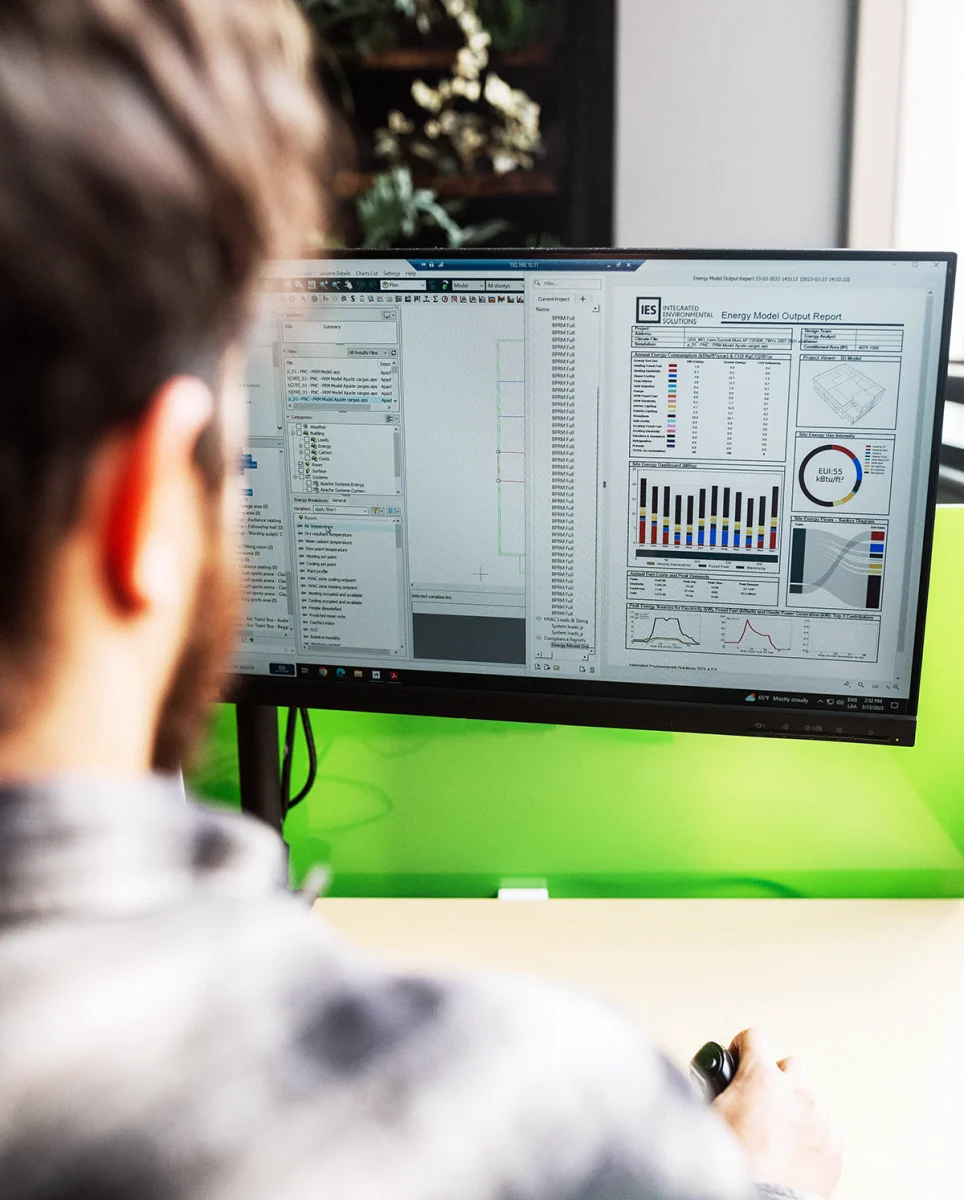
Energy modeling uses advanced digital simulations to predict how a building will perform before it is built. By integrating climate data, building geometry, occupancy patterns, and mechanical system assumptions, project teams can understand how design decisions impact energy consumption, comfort, and long-term operating costs.
For developers and constructors, this means making informed decisions early, avoiding oversized systems, and ensuring the building performs as expected once occupied.
Rather than relying on rules of thumb, energy modeling provides clear, quantitative insights that improve coordination between architects, engineers, and developers.
At Green Loop, performance modeling is not just a compliance tool — it is a decision-making framework that helps developers optimize investment, reduce operational risk, and deliver high-performing buildings.
Why It Matters
Small design decisions have long-term operational consequences
Many projects rely on simplified design assumptions when defining HVAC systems, glazing ratios, or shading strategies. Without performance analysis, these decisions can lead to:
- Oversized HVAC systems and unnecessary capital costs
- Higher-than-expected energy bills once the building is operating
- Comfort issues for occupants
- Difficulty achieving sustainability certifications or energy targets
Energy modeling allows project teams to test different design options before construction, identifying the strategies that deliver the best balance between cost, performance, and sustainability.
This results in buildings that operate efficiently, provide better comfort, and maintain long-term asset value.
Explore the performance simulations we can run for your project
Our team uses advanced building simulations to analyze energy use, thermal comfort, system sizing, and design strategies—helping project teams make better decisions before construction begins.
Energy Modeling
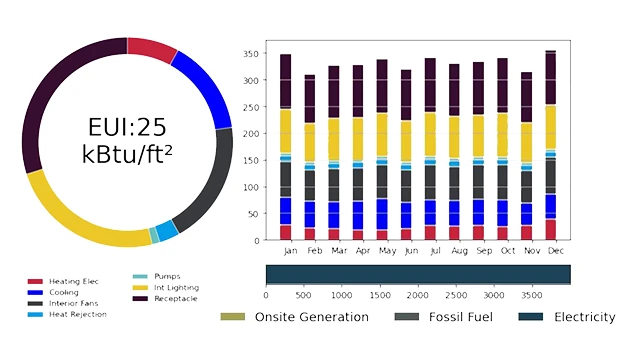
Whole-building simulations that estimate annual energy consumption, peak system loads, and expected operational performance.
Helps developers and engineers compare design options, optimize HVAC system sizing, and forecast long-term energy costs.
Thermal and Comfort Simulations
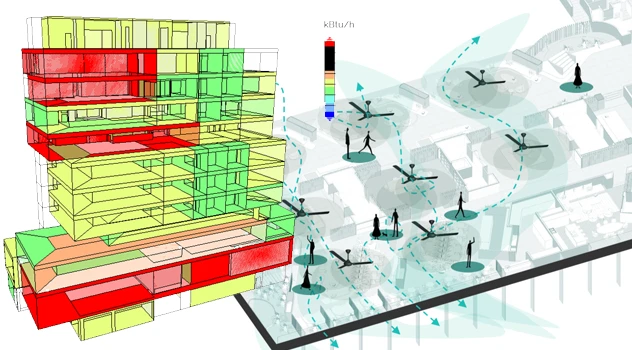
Analysis of indoor temperature distribution, solar gains, and comfort conditions throughout the building.
Helps identify overheating risks, refine façade strategies, and ensure comfortable spaces for occupants.
Passive & Bioclimatic Strategies
Analysis of building orientation, solar exposure, shading strategies, thermal mass, and natural ventilation potential.
Helps reduce mechanical cooling demand, improve indoor comfort, and lower long-term energy consumption through passive design strategies.
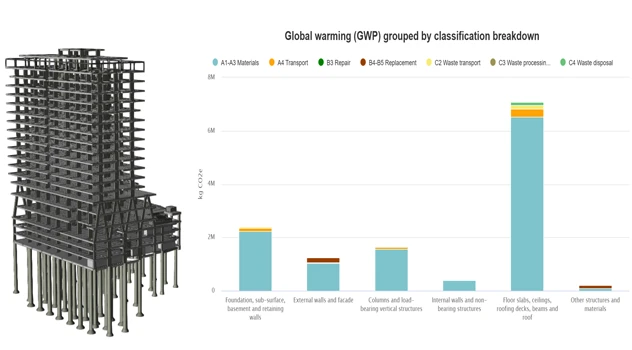
Life Cycle Assessment (LCA)
Evaluation of embodied carbon and environmental impacts of construction materials throughout their lifecycle.
Supports lower-carbon material selection while helping projects align with emerging decarbonization targets and sustainability frameworks.

CFD & Natural Ventilation Analysis
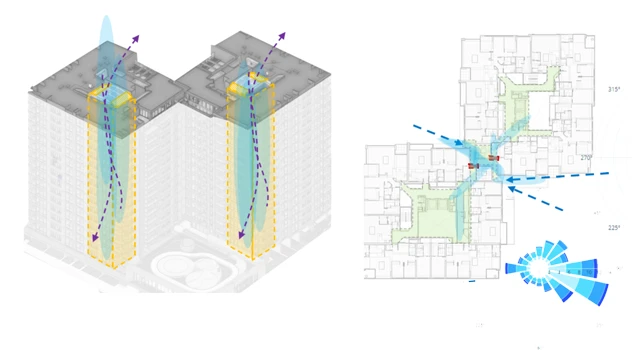
Advanced airflow simulations that evaluate wind patterns, air distribution, and natural ventilation performance within and around buildings.
These analyses help optimize natural ventilation strategies, airflow distribution, and indoor environmental quality, supporting more comfortable and energy-efficient building designs.
Proven Results Through Performance modeling
Energy modeling provides data-driven insights that help project teams make smarter design decisions.
By analyzing building performance early in the design process, developers can reduce energy demand, optimize system sizing, and improve long-term operational efficiency.
Through optimized design strategies and system efficiency improvements identified during early-stage modeling.
By refining thermal loads and avoiding conservative design assumptions.
Through daylight optimization and improved façade strategies.
Compared with conventional baseline building designs.
See How Performance Modeling Impacts Different Project Types
Hospitality & Tourism
Luxury hotels must deliver exceptional comfort while maintaining strict operational efficiency and controlling long-term energy costs.. Performance modeling allows developers to evaluate how design decisions will affect guest comfort, system sizing, and long-term operating costs before construction begins.
For the Grand Hyatt Bogotá, advanced energy simulations revealed that the building could maintain comfortable indoor conditions without the need for a conventional heating system. By analyzing façade performance, thermal behavior, and Bogotá’s climate conditions, the project team identified a strategy that eliminated the need for heating infrastructure — avoiding approximately USD 1.8 million in capital costs, while also reducing long-term operating expenses through improved energy performance.
This project demonstrates how performance modeling enables hospitality developers to make informed design decisions, reduce unnecessary infrastructure, and deliver high-performing buildings that balance luxury, efficiency, and long-term value.

Commercial & Mixed-Use
Commercial and mixed-use developments must balance tenant comfort, operational efficiency, and long-term profitability. Performance modeling allows developers to evaluate how design decisions affect energy demand, HVAC sizing, and operating costs before construction begins.
For Parque Comercial Guacarí, advanced energy simulations helped optimize the mechanical design for Sincelejo’s hot and humid climate. By analyzing ventilation strategies, cooling loads, and occupancy patterns, the project team identified opportunities to significantly reduce system capacity while maintaining indoor comfort.
As a result, the cooling plant was optimized and downsized — avoiding approximately USD 1.3 million in capital costs, while delivering ~20% energy savings and roughly USD 260,000 in annual operational savings through improved system efficiency.
This project demonstrates how performance modeling helps commercial developments avoid oversizing, reduce operational costs, and deliver high-performing retail environments that maximize long-term asset value.
Healthcare
Healthcare facilities operate continuously and require strict environmental control, high ventilation rates, and reliable mechanical systems. Performance modeling allows project teams to evaluate energy demand, ventilation strategies, and HVAC sizing early in the design process to ensure efficiency without compromising clinical performance.
For CTIC, advanced energy simulations helped the design team optimize system performance and reduce unnecessary mechanical capacity. By analyzing thermal loads, ventilation requirements, and operational scenarios, the project achieved 28.4% energy savings and a 33.1% reduction in HVAC demand compared to conventional design approaches.
This project demonstrates how performance modeling helps healthcare developments improve operational efficiency, reduce infrastructure requirements, and deliver high-performance medical facilities with lower long-term operating costs.
Corporate & Office
Corporate and office buildings must provide comfortable, productive workplaces while maintaining efficient operational performance. Energy modeling helps developers and corporate owners evaluate how design decisions affect energy demand, daylight availability, thermal comfort, and long-term operating costs before construction begins.
Performance simulations are particularly valuable in office environments where façade design, glazing ratios, daylight strategies, and HVAC systems interact closely with occupancy patterns. By analyzing solar exposure, internal loads, and ventilation strategies, design teams can optimize system sizing while improving indoor comfort and workplace performance.
Through data-driven analysis, energy modeling helps organizations deliver efficient office environments that support productivity, reduce operating expenses, and strengthen long-term asset value.
Industrial & Laboratories
Industrial facilities and laboratories often operate with high ventilation rates, process loads, and continuous occupancy schedules, making them among the most energy-intensive building types. Energy modeling helps project teams evaluate system performance, thermal loads, and ventilation strategies early in the design process to ensure efficiency without compromising operational reliability.
Performance simulations are particularly valuable in laboratories, manufacturing plants, clean rooms, and research facilities where HVAC systems, process equipment, and environmental controls must work together seamlessly. By analyzing airflow, heat loads, and system interactions, energy modeling helps optimize mechanical infrastructure while preventing oversizing and unnecessary energy consumption.
Through data-driven analysis, developers and operators can improve system efficiency, reduce operating costs, and deliver resilient facilities that support complex industrial and research operations.
Education
Educational buildings must balance comfortable learning environments with strict operational budgets. Energy modeling helps universities and schools evaluate how design decisions affect energy demand, daylight quality, ventilation strategies, and long-term operating costs before construction begins.
In academic environments, performance simulations are particularly valuable for optimizing classrooms, libraries, laboratories, and large assembly spaces where occupancy patterns vary throughout the day. By analyzing thermal loads, daylight availability, and ventilation requirements, design teams can improve indoor comfort while reducing unnecessary energy consumption.
Through data-driven analysis, energy modeling helps educational institutions develop efficient campus facilities that support learning environments, control utility expenses, and deliver long-term operational value.
Residential
Residential developments must balance occupant comfort, construction costs, and long-term energy performance. Energy modeling allows developers to evaluate how building orientation, façade design, insulation levels, and ventilation strategies influence energy consumption and indoor comfort before construction begins.
Simulations are particularly useful in multi-family housing where building envelope performance, solar exposure, and natural ventilation strategies significantly influence indoor conditions and energy demand. By analyzing thermal behavior and daylight availability, design teams can improve comfort for residents while avoiding unnecessary mechanical infrastructure.
Energy modeling helps residential projects deliver comfortable living environments with improved efficiency, reduced operating costs, and stronger long-term market value.
Goverment & Public Sector
Public sector institutions must develop policies and infrastructure that improve building performance, reduce national energy demand, and support long-term climate goals. Advanced building simulations allow governments to evaluate how different design strategies perform across climates, building types, and occupancy patterns before regulations are implemented.
In collaboration with national authorities, Green Loop led the development of Colombia’s national building energy code, using advanced building performance simulations to evaluate energy efficiency strategies across multiple climate zones and building typologies.
Through the integration of more than 1,300 building energy models, the analysis helped define performance benchmarks that improve energy efficiency, reduce emissions, and align Colombia’s regulatory framework with international standards.
This initiative demonstrates how large-scale performance modeling can support evidence-based public policy, enabling governments to implement regulations that improve building performance, reduce national energy consumption, and accelerate the transition toward low-carbon development.
Explore more solutions for new developments
Energy modeling is just one part of creating high-performance buildings. Discover additional services that help developers optimize building performance, sustainability, and long-term asset value.

Commissioning

Building Certifications

Urban Sustainability
