

Sustainable real estate performance: Why Profitability Matters
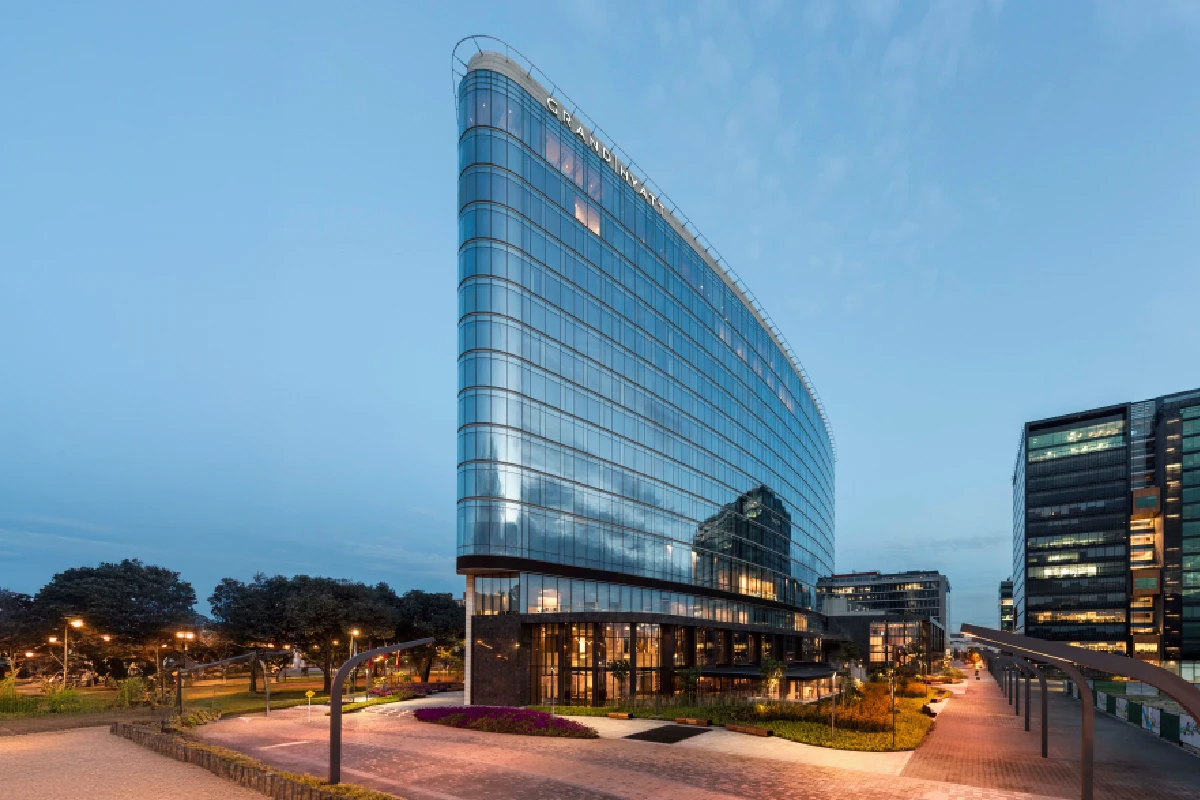
Sustainable real estate performance is no longer defined by certifications or isolated efficiency measures. For years, the real estate industry treated sustainability as an additional layer added at the end of projects. However, developers increasingly recognize that real value comes from designing assets that control costs, reduce risks, and improve long-term profitability.
Why the Market No Longer Rewards Good Intentions

Over time, the market has matured. Project after project, it has become increasingly clear that what truly matters is not whether an asset looks sustainable, but whether it actually performs the way it should.
Today, the relevant conversation revolves around far more concrete questions:
JLL has documented rental premiums for certified assets across multiple global markets, while also warning that as certification becomes more widespread, that premium gradually stops being a competitive advantage and starts becoming a basic market expectation.
Meanwhile, International Finance Corporation reports that buildings with well-executed efficiency strategies can achieve operational cost reductions ranging from 10% to 17%, along with perceived asset value increases exceeding 9%.
The real differentiator, therefore, is no longer the certification itself. It is what the asset actually does for the business.
The Question Every Developer Should Be Asking
What High-Performance Projects Demonstrate
If the sustainability conversation around your project still revolves around certification, commercial requirements, or market trends, the decision is probably being approached from the wrong angle.
Because more important than asking whether sustainability is worth the investment is understanding whether the decisions being made today will protect—or undermine—the asset’s performance over the next 20 years.
Many developers still address this issue far too late: after the façade has already been defined, after the MEP systems have been sized, after materials have already been selected—or worse, after cost overruns have become unavoidable.
And that is where the most expensive mistake is made: believing these issues can be solved at the end. In high-performance industries, that logic would be unthinkable. Take the recent Artemis II mission around the moon as an example. No one would wait until launch day to ask whether the life support system was properly designed, whether the most efficient solutions had been considered, or whether they had been correctly installed inside the astronauts’ capsule.
It may seem far removed from real estate, but the underlying logic is exactly the same: critical decisions should not be validated when there is no longer room to adapt. Yet that is precisely what happens in many projects. It is not uncommon to hear statements such as: “We installed that system because the designer recommended it, but we are not entirely sure it was the best option.”
And the consequences are very real.
We have seen newly built hospitals where ventilation systems were not given the level of priority or technical validation they required. Spaces designed to restore health ultimately exposing occupants to poor indoor air quality conditions, increasing operational risks and directly affecting human wellbeing.
And what happens when those problems are addressed after construction is complete? The reality is that fixing them at that stage involves significantly higher costs and substantial technical complexity. That is why it is worth asking whether it would have been wiser to invest earlier in specialized consulting that enabled informed decisions while the project could still be optimized. Because this is not only about optimizing CAPEX—it is about anticipating risks and, above all, avoiding much higher future costs.
That is precisely what we seek to demonstrate: doing it right from the beginning is not only possible, it creates measurable impact. The following projects illustrate exactly that.
What High-Performance Projects Demonstrate
Let’s look at two projects that demonstrate how sustainability, performance, and profitability can work together.
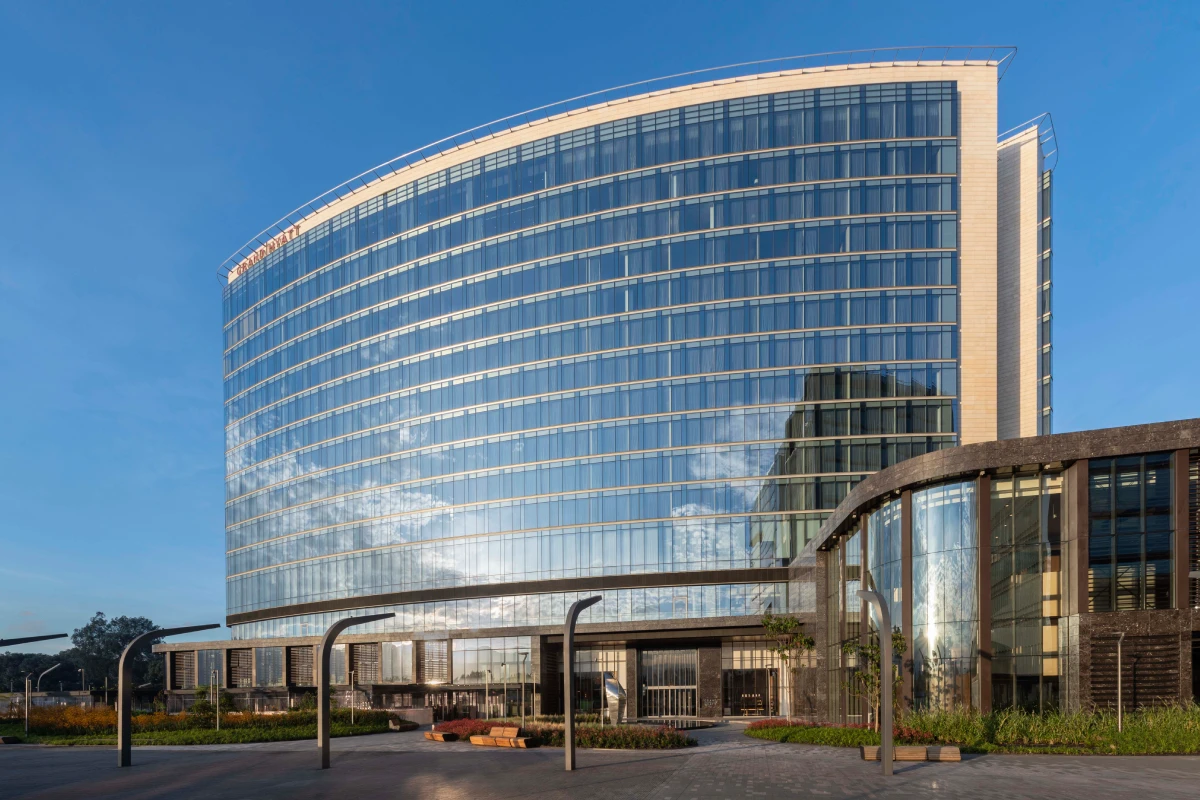
Both projects achieved sustainability certifications, reduced long-term operational costs, and avoided unnecessary capital expenditures — not by adding more technology, but by making better decisions early in design.
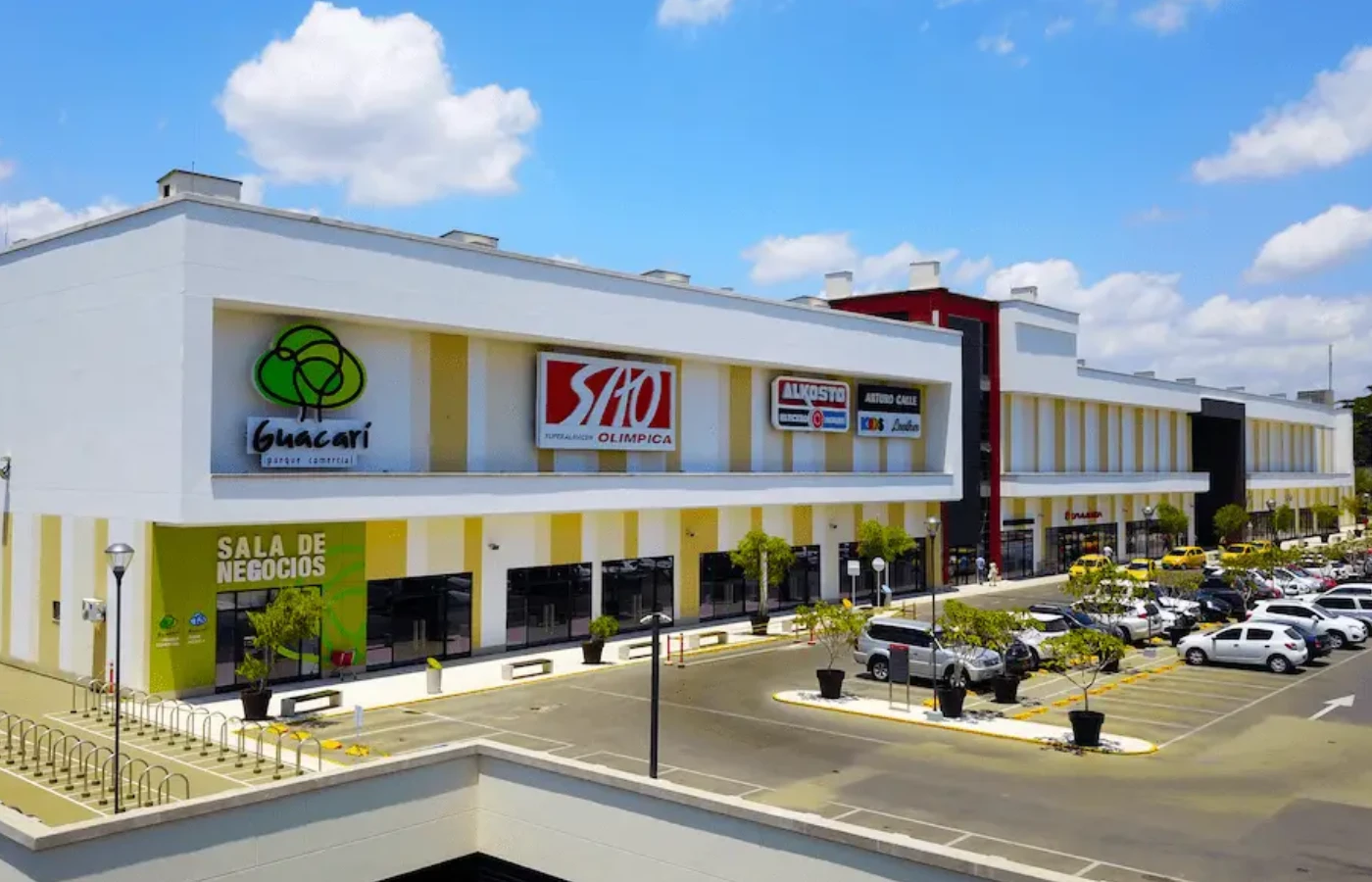
Grand Hyatt Bogotá:
Questioning a “necessary” system saved USD 1.8 million
At 2,600 meters above sea level, Bogotá’s climate creates an unusual challenge for hospitality projects: sunny and relatively mild during the day, yet cool at night, with temperatures that can drop to 7°C (45°F).
For a luxury five-star hotel like Grand Hyatt Bogotá — a USD 130 million investment with 372 guestrooms and more than 77,000 m² (833.000 sqf) of built area — the conventional design response seemed obvious: install a full heating system to guarantee guest comfort.
But the project began with a different question:
What if heating wasn’t necessary at all?
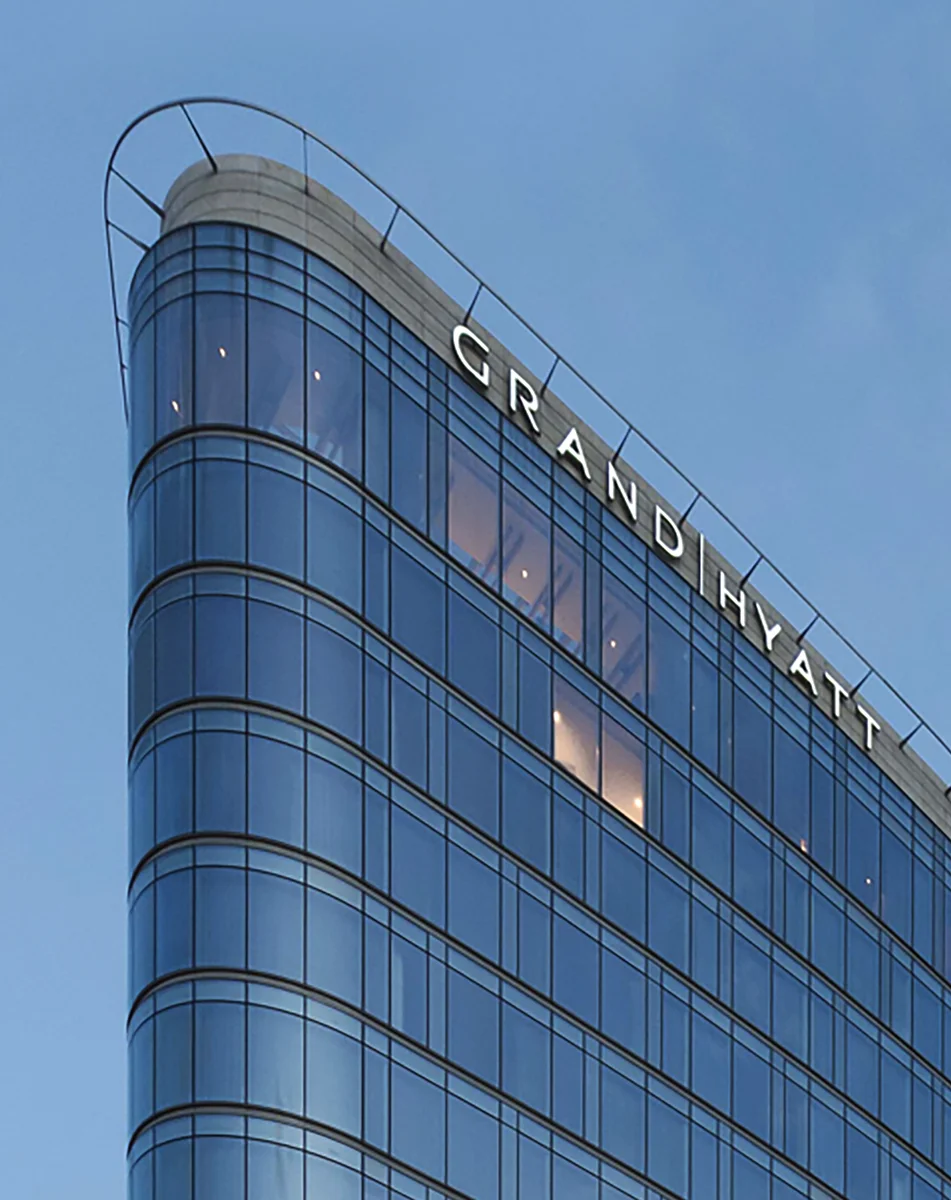
Through detailed energy modeling, Green Loop and the design team evaluated how the building envelope would actually behave under Bogotá’s climate conditions. Early simulations using monolithic glazing showed significant nighttime heat loss, reinforcing the assumption that heating would be unavoidable.
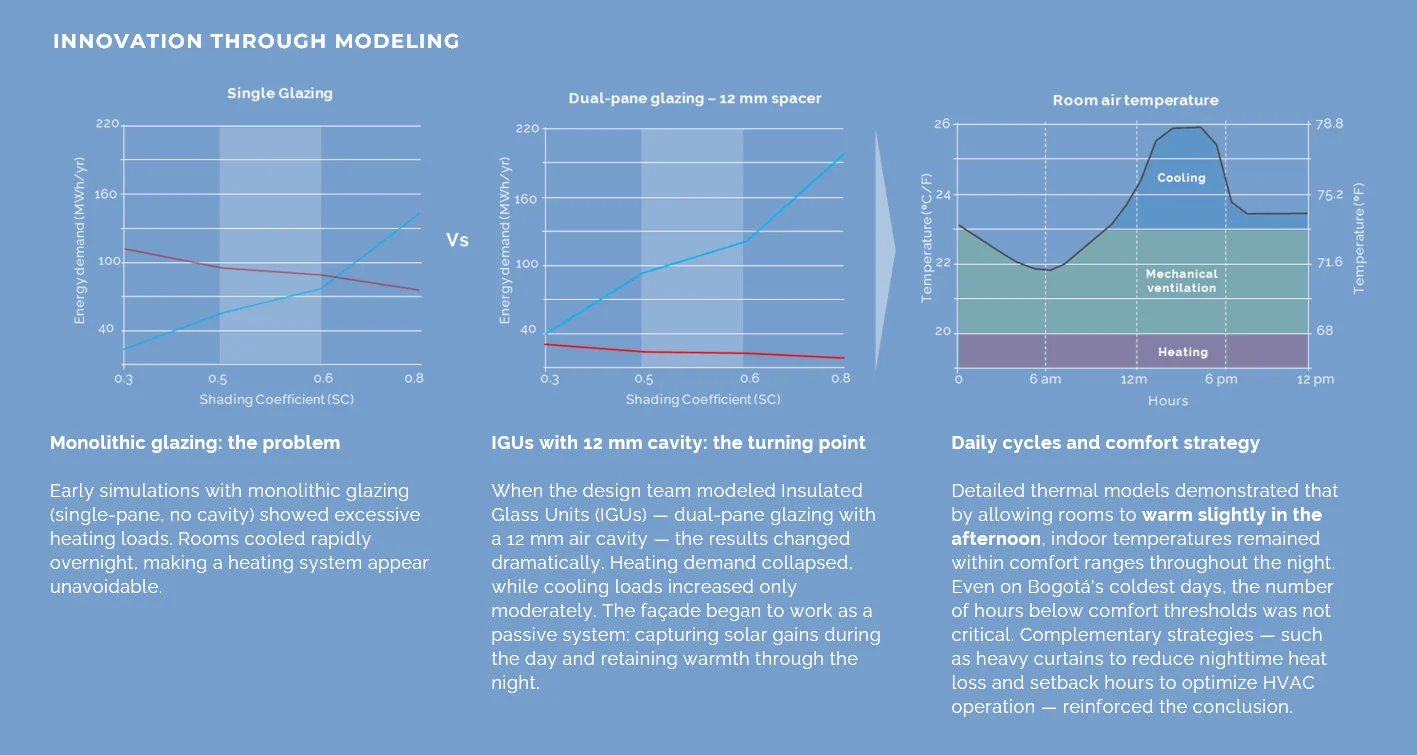
However, when the team modeled insulated glass units (IGUs) with a 12 mm cavity, the results changed dramatically. The façade started behaving as a passive thermal system: capturing solar gains during the day while retaining enough heat overnight to keep guestrooms within comfort ranges.
Additional strategies — including interior blackout curtains and optimized HVAC setback schedules — further improved nighttime thermal stability. Detailed thermal simulations demonstrated that even during Bogotá’s coldest periods, guest comfort could be maintained without installing a dedicated heating system.
For a luxury hotel, the decision was unconventional: all 372 guestrooms would operate with ventilation and cooling only — no heating infrastructure installed.
The outcome avoided approximately USD 1.8 million in capital expenditures while also reducing long-term operational and maintenance costs, all without compromising luxury standards or guest comfort.
The project ultimately achieved LEED Silver certification, including a modeled energy cost reduction of 19.2% compared to ASHRAE 90.1-2007.
But the most important lesson was not the certification itself. It was the realization that one of the project’s biggest opportunities came from questioning an assumption the market had already accepted as necessary.
Parque Comercial Guacari:
Avoiding oversized infraestructure saved USD 1.3 million
If the challenge at Grand Hyatt Bogotá was how to retain heat in a cold climate, Parque Comercial Guacarí faced the exact opposite problem.
Located in Sincelejo — one of Colombia’s hottest and most humid regions — the project needed to provide thermal comfort inside a large commercial development without allowing energy consumption to overwhelm operational costs and long-term profitability.
For a USD 25 million shopping center spanning more than 70,000 m², the conventional approach would have been straightforward: install a large cooling plant capable of handling extreme climate conditions with a substantial safety margin.
The original design contemplated a chiller plant sized at approximately 830 tons of refrigeration (TR).
But once again, the project started with a different question:
Was all that capacity actually necessary?
Working closely with the HVAC design team, Green Loop proposed a performance-driven approach that challenged conventional assumptions from the beginning. Instead of simply accepting prescriptive ventilation rates and oversized cooling loads, the team explored alternative strategies capable of reducing demand without compromising comfort or indoor air quality.
One of the project’s most important innovations was the implementation of the Indoor Air Quality Procedure (IAQP) — a LEED-recognized methodology that is still rarely used in Latin America. Rather than relying exclusively on prescriptive outdoor air requirements, the IAQP approach optimized ventilation rates based on actual indoor air quality performance.
This strategy was reinforced through demand-controlled ventilation using smart CO₂ sensors, dynamically adjusting fresh air rates according to occupancy levels, as well as bipolar ionization to further improve indoor air quality performance.
The result fundamentally changed the project’s mechanical design.
The cooling plant was ultimately reduced from 830 TR to 491 TR, avoiding unnecessary oversizing and eliminating approximately USD 1.3 million in capital expenditures.

Operational performance improved as well:
The project ultimately achieved LEED Gold certification, but more importantly, it demonstrated that sustainability becomes most valuable when it helps eliminate infrastructure the project never truly needed in the first place.
The lesson was not about adding more technology. It was about using technical rigor, modeling, and performance-based thinking to avoid expensive decisions before they became permanent.
The shift already underway
These two projects confirm something the market still tends to underestimate: sustainability creates more value when it stops being viewed as an additional layer and starts operating as an integrated decision-making framework within the project itself.
In both cases, the results did not come from “doing more,” but from making better decisions: in one project, completely eliminating an unnecessary investment; in the other, avoiding the oversizing of expensive infrastructure. The constant was the same: using performance as the basis for design.
That is where the conversation truly changes. Sustainability stops being a narrative or an external requirement and becomes a practical tool to protect capital, optimize operations, and create more resilient assets over time. And although unevenly, the market is already moving in that direction.
The assets gaining relevance today are not simply the ones that comply—they are the ones that perform better: assets that operate more efficiently, respond more effectively to real operating conditions, and are better prepared for an increasingly demanding regulatory and climate landscape.
In that context, certifications still matter—as quality frameworks and as signals to investors or users—but their real value emerges when they are supported by actual performance.
That is why the real question is no longer whether sustainability is worth the investment, but rather: What decisions are we making today to ensure this asset performs over time?.
It is a more demanding question, but also a far more useful one, because it connects directly with business logic.
From this perspective, sustainability stops being the goal and becomes the means. Performance is the ultimate objective.
The assets that will remain competitive in the future will not necessarily be the ones that talk the most about sustainability, but the ones that operate better, cost less, and preserve their value over time.
That is where the market is heading—and that is where the conversation is worth starting.
At Green Loop, this is precisely where we work: translating sustainability into decisions that improve performance, profitability, and asset value from the very beginning. Because when sustainability is approached that way, it stops being an additional cost and becomes a true competitive advantage.
Ready to design assets that perform better over time?
The conversation is no longer about adding sustainability at the end of a project. It is about making smarter decisions from the beginning — decisions that protect capital, optimize operations, and strengthen long-term asset value.
At Green Loop, we help developers, owners, operators, and design teams translate sustainability into measurable business performance.
Explore more Insights

Want to stay updated?
If you enjoyed this content and want to stay updated on ideas, projects, events, and insights shaping the future of high-performing buildings, subscribe to our Insights Blog