
Airbus High 5+
Project
Airbus High5+ Decarbonization Roadmap
Location
United States
Ecosystem
Industrial & Manufacturing
Project type
Industrial & Manufacturing
Client
Scalian Corporation USA
Area
852,534 sq ft [79.203 m2]
Services
Environmental Footprint Reduction Roadmap
AIRBUS – Decarbonization Roadmap
From data to decision at portfolio scale
Sustainability at scale is not about identifying more initiatives—it’s about knowing which ones actually matter.
For Airbus, this project—developed alongside Scalian in the U.S.—was not conceived as a traditional assessment, but as a decision-making framework. The objective was to understand, with precision, how a complex portfolio of industrial operations could transition toward lower emissions without compromising performance, reliability, or cost efficiency.
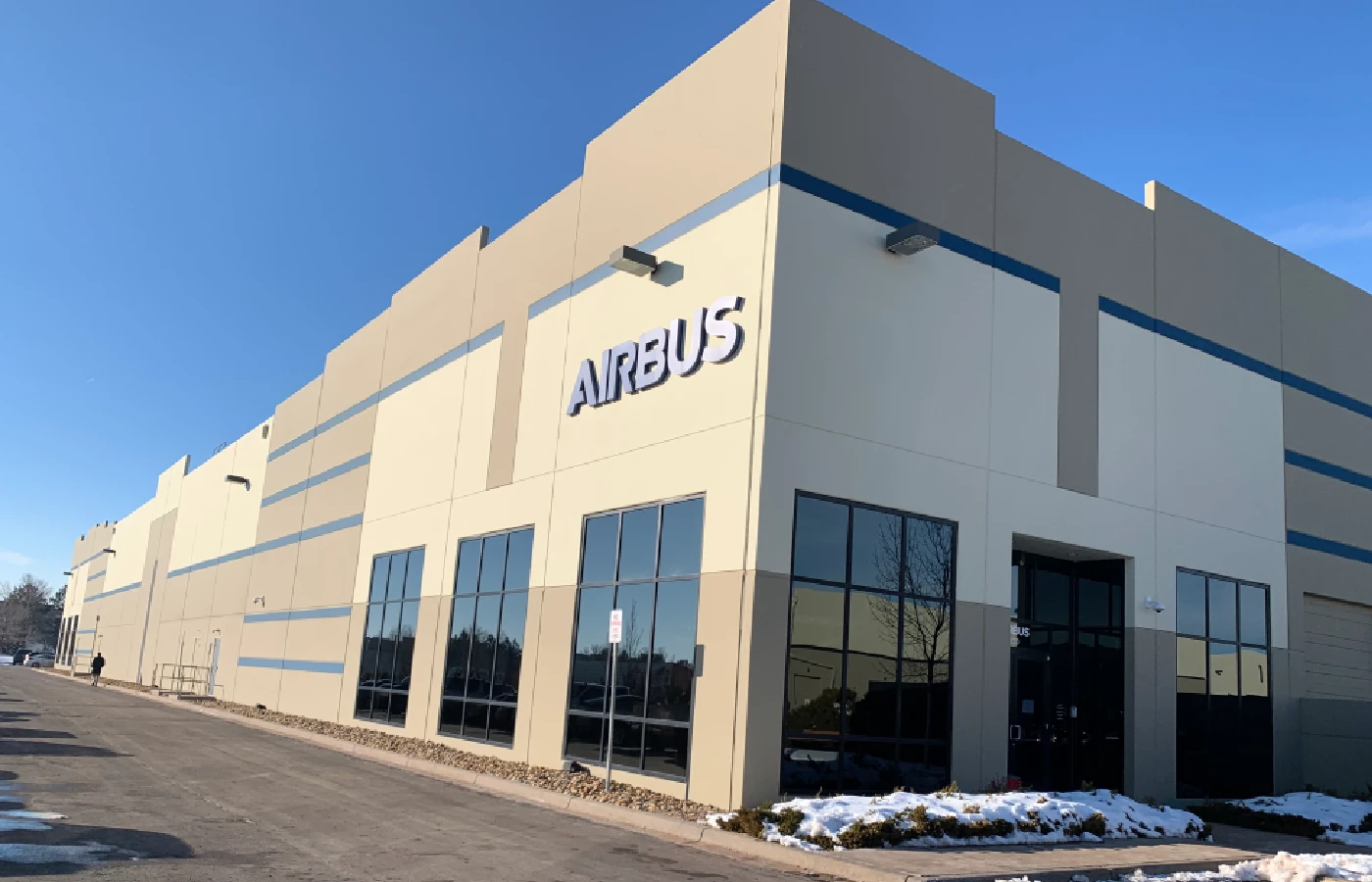
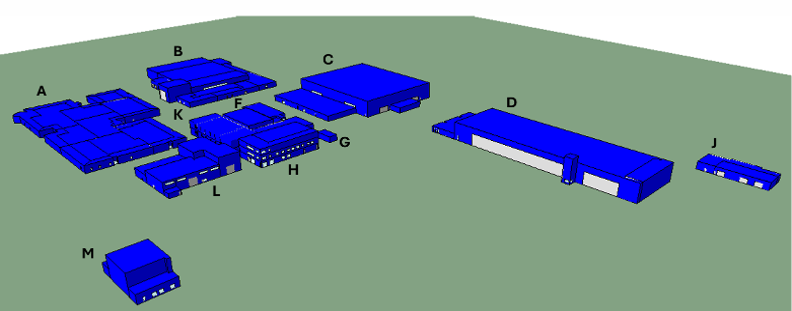
Covering over 850,000 sqf across multiple large-scale industrial facilities, the work began by replacing assumptions with data. Through on-site audits, operational analysis, and emissions quantification aligned with the GHG Protocol, the project established a clear baseline of where emissions were actually coming from—and, more importantly, where intervention would generate the highest impact.
But the value of the process was not in the diagnosis itself. It was in what came next.
Rather than producing a catalogue of disconnected sustainability measures, the project translated technical findings into a structured roadmap—one that prioritizes actions based on their real contribution to carbon reduction, operational feasibility, and financial return. This included evaluating pathways such as system electrification, HVAC optimization, integration of renewable energy through PPAs and on-site generation, and the deployment of control systems and submetering to improve operational intelligence.
At the same time, water and waste strategies were assessed not as isolated initiatives, but as part of a broader resource efficiency model—ensuring that improvements in one area would not create inefficiencies in another.
The outcome is not a static report, but a dynamic decision tool. One that allows Airbus to sequence investments, distinguish between quick wins and structural transformations, and align its operations with long-term decarbonization targets under its High5+ strategy.
The numbers reflect the opportunity: up to 20% energy savings, 25% water reduction, and renewable energy contributions reaching 76% in certain scenarios. But the real impact lies elsewhere—over $8.5 million USD in identified financial value and, more importantly, the ability to make informed decisions across a complex operational landscape.
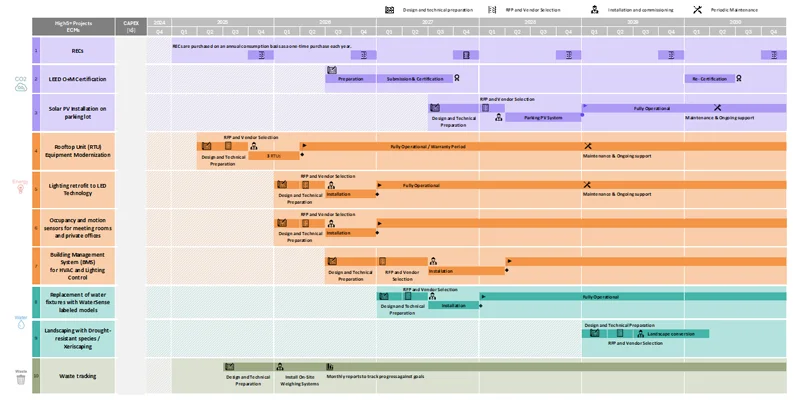
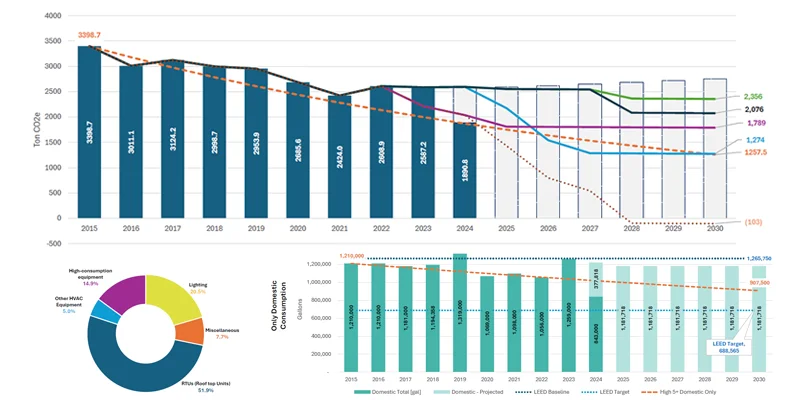
This project demonstrates a critical shift: decarbonization is no longer about measuring impact—it is about deciding where to act, where to invest, and what to avoid.